Building from scratch
The platform needed a complete frontend foundation, not just isolated screens.
I built the React architecture with reusable components, custom hooks, Redux state, and maintainable UI flows.
Case study
Led frontend development from scratch for an AI music generation platform, including the music player, song generation experience, SEO architecture, and performance optimization.
I led Sound Of Meme's frontend development from scratch using React, Redux, and Tailwind CSS. I built the music player and AI song-generation interface, established reusable components and hooks, and worked on bundle optimization and the SEO blog architecture. This case study documents that frontend scope and the engineering decisions behind it.
Evidence and scope: The approximately 8 MB to 2 MB bundle reduction is a historical project estimate. Before-and-after build artifacts and test conditions are not published here, so it is not a reproducible benchmark, a current site measurement or evidence of a ranking or conversion increase.
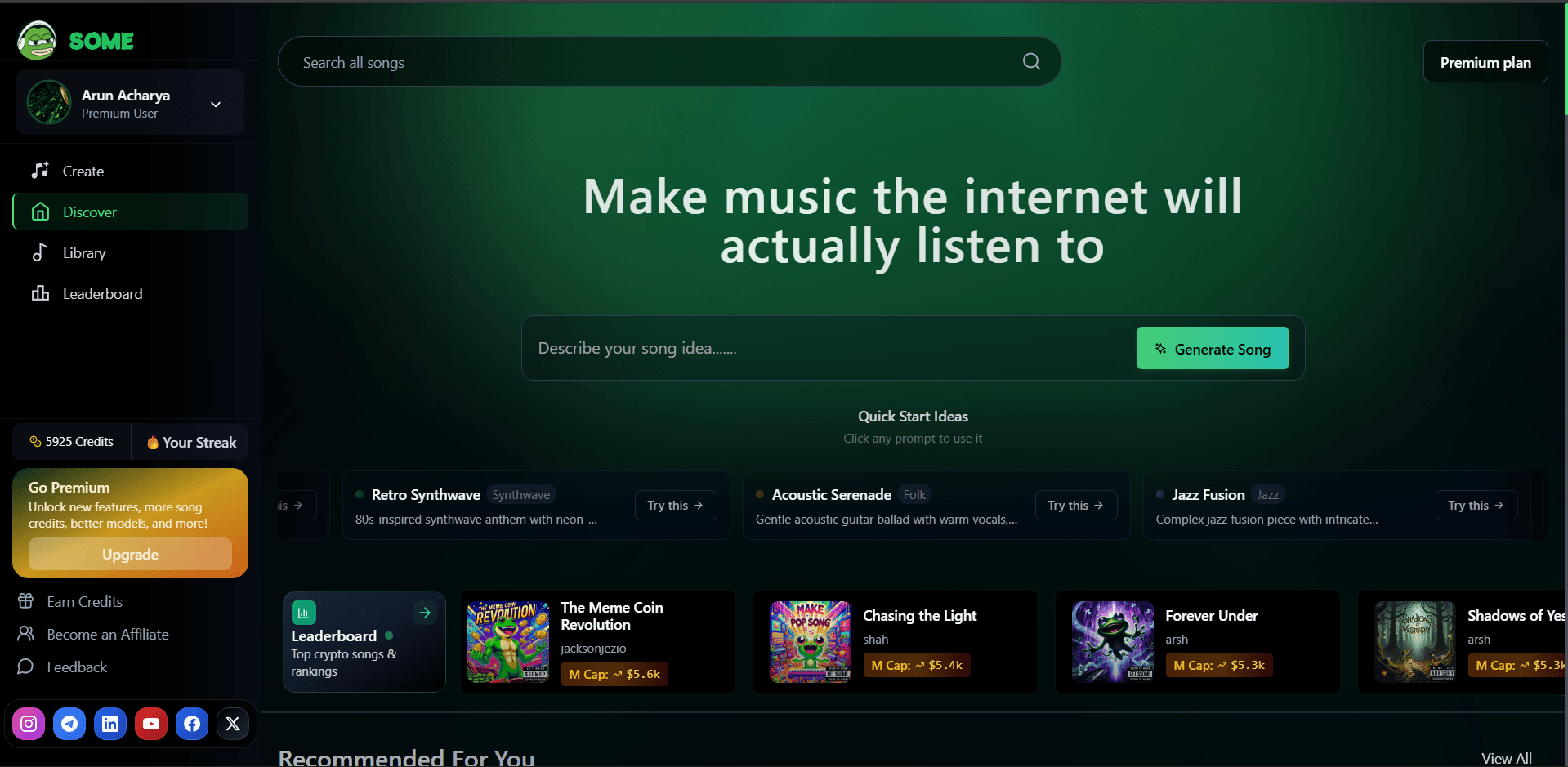
The product needed a scalable frontend from scratch, smooth AI song generation flows, a music player system, and better production performance.
Sound Of Meme was an AI-powered music generation platform where I owned the frontend from scratch. The work covered scalable architecture, reusable components, custom hooks, maintainable UI flows, the core music player, AI song generation, SEO-focused frontend architecture, and production performance.
For similar work, explore Performance Optimization.
Planning a similar build? Read React and Next.js Performance Audit: What to Ask for Before a Rebuild.
Planning a similar build? Read Frontend Revamp Checklist for Websites and SaaS.
The platform needed a complete frontend foundation, not just isolated screens.
I built the React architecture with reusable components, custom hooks, Redux state, and maintainable UI flows.
The production frontend needed a smaller bundle and more selective loading.
I used lazy loading, route-level code splitting, shared/global components, and rendering optimization to reduce the bundle. The historical size estimate and its limitations are noted above.
The AI generation experience and music player needed to feel smooth and production-ready.
I built the core music player system and user-facing AI song generation experience with responsive layouts and smooth interactions.
Let’s talk it through. In a short intro call, we’ll explore your goals, scope, and the next step together.
Choose a time that works for you.